Posts tagged: scary

How Gordon Lightfoot died and then didn’t, as told by the person who first tweeted the ‘news’

Gordon Lightfoot, a singer and Canadian icon. Not dead. Although, for an hour or so earlier this month, everyone thought he was.

Starting with one single tweet — “RIP Gordon Lightfoot” — the false news was picked up, retweeted, and amplified until it hit the mainstream media (all of which took a mere 10 minutes, frighteningly).

Lightfoot himself, apparently on his way to a dentist appointment when he heard the news of his own demise on the radio, was actually alive and well, and everything was quickly cleared up.

Now, though, the author of that first tweet — let’s call her Tweeter Zero — has written an essay in the Globe and Mail about how the whole thing got started, and how it brought the wrath of the internet down on her:

By the time I went back online, Gordon Lightfoot was officially undead (phew!) and the witch hunt was on (uh-oh!). Media guru and sleuth Ian Capstick was hot on my trail, and even had my picture and the dreaded tweet in question on his blog. Commenters were gleefully posting personal information about me: my full name, where I lived, whom I worked for. So I did what anybody in my situation would do. I opened a bottle of wine, and began to drink.

(Full disclosure: I was briefly acquainted with the aforementioned Mr. Capstick during my days at Canadian University Press.)

Lest you think the poor Tweeter Zero is fully to blame, she broadcast the message only to her meagre 100 Twitter followers, and she blames the origination of the whole episode on a telephone prank call (“But nobody seems to be interested in him. He used the telephone. And dude, that’s just so 20th century.”)

A lesson, perhaps, in the power and speed of the information superhighway.

Now, we came not to bury Gordon Lightfoot, but to praise him:
The only people who worry about surveillance are people who have something to hide?

Try this one on for size: Walmart puts surveillance cameras in washrooms. (And they weren’t the only ones.)

privacy ≠ wrong

Five-year anniversary of a ’star quake’

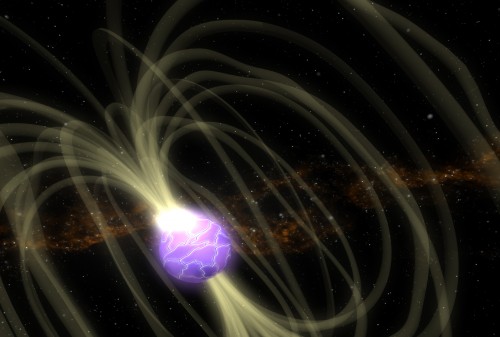
Reading about the magnetar burst that blinded satellites five years ago left me agape. Some facts, gleaned from this blog post at Discover Magazine:

If you crushed every car in the United States into the size of a sugar cube, that’s the density of this magnetar. Except the magnetar is 20 kilometres wide. That gives it a gravity that’s maybe 100 billions times as strong as Earth. And a magnetic field that may be a quadrillion times as strong.

So what happens when the surface cracks? In a ’star quake’? Well, such a quake might have a Richter value of 32 — and remember, a Richter earthquake that’s 9 (like the one that caused the Indian Ocean tsunami, also five years ago) would be 10 times as powerful as Richer 8. A Richter 10 quake would be 100 times as powerful as a Richter 8. A Richter 11 would be a thousand times as powerful as a Richter 8. And so on. And this is a Richter 32.

The quake released a blast of energy — so much that in a fifth of a second, the magnetar released as much energy as our sun does in a quarter-million years.

It was 50,000 light years away, thank goodness. Which is really freaking far. But on some satellites, the resulting wave of photons completely washed-out their detectors — even through the photons had to travel through the satellite itself.

I can’t do it justice — and even the Discover blogger seems to struggle for superlatives to describe it — but let’s just say I’ve awed by how insignificant we are.

What exactly do you have to do to get kicked out of a soccer game?

Holy crap! Never ever again will I use the phrase “you play like a girl.” (Not that I ever did.) Take a look at this video and tell me that this player doesn’t make you just a little bit afraid to play sports.

The odd part is that she only got a yellow card, or a warning. Since the video emerged, her team has suspended her, though.

The legend of Stingy Jack

jackolantern

An original short story, by Grant Hamilton. Based on the folk tale.

Read it, after the jump.

Read more »

Meteor explodes in Earth’s atmosphere with three times the force of Hiroshima A-bomb

If you speak Indonesian, you’ll hear the news announcer telling you about a meteor that exploded in the sky above South Sulawesi, Indonesia, earlier this month. The clouds of smoke are the aftermath. I just saw an article about it in New Scientist:

[It released] about as much energy as 50,000 tons of TNT, according to a NASA estimate released on Friday. That’s about three times more powerful than the atomic bomb that levelled Hiroshima, making it one of the largest asteroid explosions ever observed.

However, the blast caused no damage on the ground because of the high altitude, 15 to 20 kilometres above Earth’s surface ….

The amount of energy released suggests the object was about 10 metres across, the researchers say. Such objects are thought to hit Earth about once per decade.

No telescope spotted the asteroid ahead of its impact.

I’m a big fan of increased spending to monitor the risk from spaceborne rocks. Until we colonize other planets — better, other solar systems — the human species remains at risk. We basically have all of our eggs in one basket. We call that basket “Earth.”

The Lady Elegance Hair Colouring Brush

hairbrush

Have you ladies out there ever been travelling, and decided you were unhappy with your hair colour? If you’re in a strange city, you may not be able to find a salon, and who knows how expensive that would be? Never mind the hassle of traditional colouring methods! Or maybe you just need a quick and easy change.

If that’s the case, the Lady Elegance Hair Colouring Brush is the product for you! Simply fill the brush with your favourite hair dye and voila! Instant change!

As Michael K. notes on Dlisted, the woman in the picture isn’t even using the brush on her real hair.

This reminds me of another ridiculous hair product that I can’t imagine anyone would use: the Flowbee. Because nothing says “great idea” like taking a glorified vacuum to your head.

I know, let’s all go snowboarding — strapped to gigantic huge kites!

At first, this looked kinds of fun. Then funny. And then frightening like all get out.

I have gone skydiving, but this looks like a wee bit more danger than I’d like to get into.

(via BB)

If you want to learn how to kiss, DON’T take this advice

I have no idea what the purpose of this video was, if it was a commercial, or an instructional video, but I am enthralled. Not only is it ridiculous with it’s “stats” but the advice is terrible! If a guy ever started trying to suck the air out of my mouth, I would think he was an Incubus trying to take my soul!

And no one, ever, would do the “Music Kiss.” Not ever.

(via Everything is Terrible)

What uses more electricity, your XBox, or San Diego?

Okay, the question is more like this:

Which uses all more electricity: all the video game consoles in the United States (Xbox, PS3, Wii, etc), or the entire city of San Diego?

The answer is, they’re tied. I’ll throw some numbers at you, for context:

  • 40 per cent of all homes in the U.S. have at least one console
  • San Diego is the ninth-largest city in the U.S.
  • A PS3 or an XBox uses about as much energy over a year as two brand-new refrigerators
  • A Wii uses less than 15% the power of a PS3 or an XBox
  • There are 1.3 million people in San Diego, many of them chugging air conditioners in the southern California heat.

My eyes just about popped out of my head when I realized just how much power is being used by people leaving their video games on for days at a time, just because it’s easier than hitting the save button.

I learned about this from a New York Times story, but you can download the original report here, where you will also find out that using you game console as a Blu-Ray player uses several times more energy than a standalone player would.

Oh, and by the way: that’s 16 billion kWh of energy that San Diego and video games each use every year. The report’s authors estimate that 11 billion kWh of that could be trimmed with simple energy-saving ideas like an auto-save hibernation feature, like the one on your laptop.

What the Internet knows about you — dot com

Now, I know the concept of “privacy” is nebulous on the Internet, but I’d still like to maintain a wee bit of circumspection around my browsing habits, thank you very much.

So this was an eyeopener:

http://whattheinternetknowsaboutyou.com/

It displays a selection of your browsing history — including many popular websites, but also some of what you did there.

It’s currently uber-popular, and getting a bit slammed, so if you test it out, be prepared to wait a while, or come back later. Still, it’s worth visiting, just to see how much your web browser rats you out.

Try the (even slower) “all” page to see the full trail you leave behind you.

Now remember, the next site that seeks out this data might not be named “what the internet knows about you”. It could, in fact, just be code that’s hidden on whatever server supplies ads to one of your favourite sites.

And if you don’t care what your browser history tells, what about the saved passwords for your online banking, etc?

Is there an app for turning on your brain again?

iphone

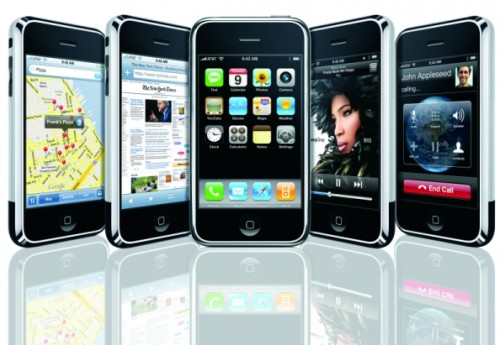
Uh-oh. I’ve made fun of the endless stream of “there’s an app for that” products for a while, but life is beginning to imitate humour just a little too much for my taste.

First, I saw this intelligent post over on Boing Boing Gadgets about how blogger Lisa Katayama lost her mind to her GPS:

I started to forget how to get places without it. The map in my brain became a distorted blur. And then my driving became more reckless. I invented this game where I tried to beat the estimated arrival time that the GPS gave me. Often, that entailed running yellow lights and exceeding the speed limit. Sometimes, the GPS fell off of its suction cup on the windshield and onto the floor, and I would have to fumble around with my right hand while steering the wheel and shifting gears with my left.

The string of comments is insightful — people comment that with cell phones, they no longer need to remember phone numbers, they no longer recall birthdays thanks to Facebook, even simple math is a skill that’s being forgotten. “Technology makes us lazy and dumb in specific ways so that we can (theoretically) use that brain-space for something else. Doesn’t always work that way,” says one.

Of course, this has been an argument since at least the invention of the pocket calculator. But I think the smartphone explosion — characterized by the iPhone, though not exclusively Apple’s fault — has really exacerbated the issue.

Because just now I read this little vignette:

“I’m running an app on my iPhone that tells me how much I can drink before I get into my car. And the lady behind the bar has poured you 8 ounces, not 6.”

“So you trust your iPhone to tell you precisely when to stop?” I asked.

“Oh, yeah. I also run a calorie app,” said Oliver, a little too enthusiastically.

“What’s a calorie app?” I said, dumbly.

“It’s an app that tells me exactly how much I should eat every day,” he replied. “But it’s a bit of a problem to be honest, because when it tells me I’m 300 calories under my limit, I then order a dessert, even though I don’t actually feel like eating a dessert.”

“So you let these apps tell you what to do and how to live?” I asked, feeling a weird frown forming above my shades. “Don’t you realize that half of this techy stuff was designed by people who barely see the light of day, adore only numbers and secretly want you to be a little more like them?”

Could you work for Fox News?

Fox News seems to be in need of a fact checker. I want to know if this is simply a failing of the individual in charge of these sorts of things, or if the education system in the good ol’ US is in worse shape than I thought…

Can you spot the error?

Can you spot the error?

Ant mega-colony may rival human global domination

Here’s an interesting fact about ants: if you bring ants from different colonies together, they will fight. That was taken for granted until science discovered that some related colonies would be friendly to their cousins from other colonies — making what they called super-colonies.

Now, according to a piece on the BBC, scientists have discovered that super-colonies from different continents are, apparently, at perfect peace with each other.

Argentine ants in Europe, the US and Japan will not fight each other, and in fact treat each other as members of the same colony, according to the story:

The colony may be the largest of its type ever known for any insect species, and could rival humans in the scale of its world domination.

In Europe, one vast colony of Argentine ants is thought to stretch for 6,000km (3,700 miles) along the Mediterranean coast, while another in the US, known as the ‘Californian large’, extends over 900km (560 miles) along the coast of California. A third huge colony exists on the west coast of Japan.

Whenever ants from the main European and Californian super-colonies and those from the largest colony in Japan came into contact, they acted as if they were old friends.

These ants rubbed antennae with one another and never became aggressive or tried to avoid one another.

In short, they acted as if they all belonged to the same colony, despite living on different continents separated by vast oceans.

Freaky! And you know what? Even human colonies (we call them countries) separated by oceans sometimes fight and disagree. So I think the ants have one up on us there.

I, for one, welcome our new insect overlords.

Big Brother is watching

big brother Everything I’ve ever read about the NSA (National Security Agency) has felt like the creation of an author of thriller novels — a large, faceless government agency brimming with unimaginable technology and power. Because of the unbelievable projects that are purportedly undertaken by this agency, I’ve always felt that what is reported about the NSA is more rumor than fact.



This article from Nova is no exception. The undertakings it claims the NSA are involved in range well into what should be the realm of science fiction:

With the entire Internet and thousands of databases for a brain, the device will be able to respond almost instantaneously to complex questions posed by intelligence analysts. As more and more data is collected—through phone calls, credit card receipts, social networks like Facebook and MySpace, GPS tracks, cell phone geolocation, Internet searches, Amazon book purchases, even E-Z Pass toll records—it may one day be possible to know not just where people are and what they are doing, but what and how they think.

Seriously? With enough information about my online activities, purchase history and physical movements, it is possible to know what and how I think? From a theoretical point of view, I can see how that idea could be debated, but from a realistic point of view, I rarely know what I’m thinking myself. I refuse to believe that a computer will be able to predict what I will be thinking based on my past. Humans are simply not consistently rational.

As this project expands, they plan on including newpaper information, historical data and other inputs that will allow this computer to have predictive capabilities:

Unregulated, they could ask it to determine which Americans might likely pose a security risk—or have sympathies toward a particular cause, such as the antiwar movement, as was done during the 1960s and 1970s. The Aquaint robospy might then base its decision on the type of books a person purchased online, or chat room talk, or websites visited—or a similar combination of data.

The implications such a machine would have on personal privacy are immense. And completely terrifying.

Dansette